Sunday, March 6, 2011


Monday, February 28, 2011
Come Join us for a St. Andrews Adult Form!
This week ( March 6th ) some of the EA Terps will be leading the adult forms at St. Andrews Episcopalian Church in College Park. We are hoping to use this time to give an update and explanation of the garden and its origins. Plus, we will be asking for participation in a design charrette. Be prepare to be creative! This charrette will be a way we can continue our designing process with ideas of the community's voice being heard and added into the design. The goals of the garden is to be a true community collaboration, so..........join us for your input.
Our first gift to the garden
I would like to thank Paul Schwobel for donating our first compost bin to the garden! We will be setting it up by the Student center, so feel free to add your compost in ( coffee grinds, old flowers, and other biodegradable materials )
Here is a website on what can be composted: http://eartheasy.com/grow_compost.html
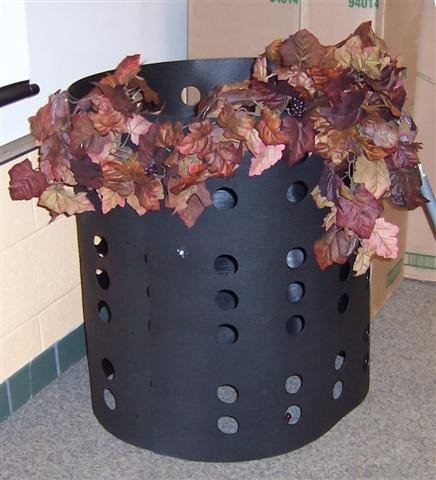
We ( the students of EA Student Center ) will be keeping a compost pail in the Student Center to help cut down our waste in the house and add to the compost bin.

Garden Committee Meeting update
This past week we had a garden meeting where I displayed a site analysis of the garden site. It had four sections: Site Context, Site Flow, Constraint and Opportunities, and a Sun Study Chart. This was a very important stage in our garden meetings because it helps us see the site with a holistic approach. We learned how many types of people ( students, parishioners, and visitors ) moved in the space. We also learned that the major run off come from the parking lot and the student center's roof.
Site Context

SunStudy

Site Flow

Constraints and Opportunities

Sunday, February 6, 2011
Organic Gardening before it was cool!
I ran into this really nice video made in 1984 about Halifax gardner Carol Bowlby. She talks into detail about her wonderful garden she has in such a short growing season. With no help from chemicals she has the perfect organic garden and she was doing this way before organic became such a fashionable word. Also note at the end of the video how small her yard/garden is. It is smaller then our plot of land and she even has a nice place set off for her children to play in. This is a really thought out design for a urban garden.
enjoy and be inspired!
enjoy and be inspired!
Sunday, January 30, 2011
What is in a name?
I want to hear your input and get your views on what we should call the garden.
Click on the link below:
Garden name vote!
Organic?!?!
What does this term mean?
Organic Gardening ( the simple answer ) is where gardeners only use animal or vegetable fertilizers rather than synthetics. Where natural pest control devoid of industrial insecticides is used. Instead of using harmful agents that will kill "bad" bugs as well as the "good" bugs. In other words, using natural substance and beneficial insects to ward off pests.
Organic Gardening ( the philosophy ) stresses that we should be increasing the natural health of the soil, choosing appropriate plants that are suited to your area, and working with nature to produce a healthy and productive garden. It understands that we cannot control, but rather we must encourage nature. It is taking the approach of treating the cause of problems and not the symptoms. At times Organic Gardening my seem like a great unknown mystery, but it is not. It is just a different system that requires observation and common sense. For every problem you might come across and you may think of using chemicals ( synthetics ) solution, there is always an organic solution.
We heard in our last meeting from Paul a great example of how you could use egg shells in the soil to prevent Blossom-End Rot in your tomato plants. This is a great example of being an Organic Gardener.
Do you think we can practice being an Organic Gardener in our small community garden?
Do you have any other organic tips to share?
Organic Gardening ( the simple answer ) is where gardeners only use animal or vegetable fertilizers rather than synthetics. Where natural pest control devoid of industrial insecticides is used. Instead of using harmful agents that will kill "bad" bugs as well as the "good" bugs. In other words, using natural substance and beneficial insects to ward off pests.
Organic Gardening ( the philosophy ) stresses that we should be increasing the natural health of the soil, choosing appropriate plants that are suited to your area, and working with nature to produce a healthy and productive garden. It understands that we cannot control, but rather we must encourage nature. It is taking the approach of treating the cause of problems and not the symptoms. At times Organic Gardening my seem like a great unknown mystery, but it is not. It is just a different system that requires observation and common sense. For every problem you might come across and you may think of using chemicals ( synthetics ) solution, there is always an organic solution.
We heard in our last meeting from Paul a great example of how you could use egg shells in the soil to prevent Blossom-End Rot in your tomato plants. This is a great example of being an Organic Gardener.
Do you think we can practice being an Organic Gardener in our small community garden?
Do you have any other organic tips to share?
Subscribe to:
Posts (Atom)